
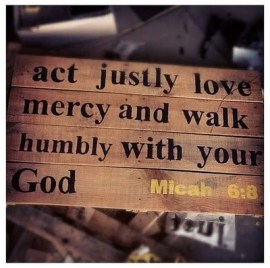
Scripture for the Week: Micah 6:8
Introduction
For a detailed introduction to this series, see the Introduction in the Week 1 or Week 2 devotions. The idea is to live with the Scripture for the Week every day through the whole week. The devotion may either be done by yourself or with someone else. Good conversations will almost certainly come from sharing this with someone else.
Devotion
How are the devotions going so far?
You may already have a regular devotional life. If so, I would imagine your devotions are from a book or online resource that offers different Scriptures and reflections for each day. The devotional style that we are doing together may, at times, try your patience, and may seem like a waste of time. When I prepare to preach, I find it helpful to read the Scriptures early in the week to get them in my mind. Then, I live with them through the week coming back to them to refresh my memory or to clarify a detail.
If you haven’t had a regular devotional life, I pray that this may be a way for you to begin having some time set aside with God.
This week’s Scripture is from Micah 6:8. Micah was a prophet at the same time as Isaiah, Hosea, and Amos. Micah was different from the other prophets because he did not grow up in Jerusalem and didn’t come from a wealthy or educated family. He was just a regular guy. He saw the abuse and corruption in Jerusalem and proclaimed God’s judgement, but also God’s forgiveness. You see from this verse the heart of Micah as he calls people to remember who they are … they know God and they know how they are to live: to do justice, love mercy, and walk humbly with God. The first two weeks of this devotion focused on the Great Commission and the Great Commandment. A friend of mine refers to this week’s Scripture as the Great Requirement.
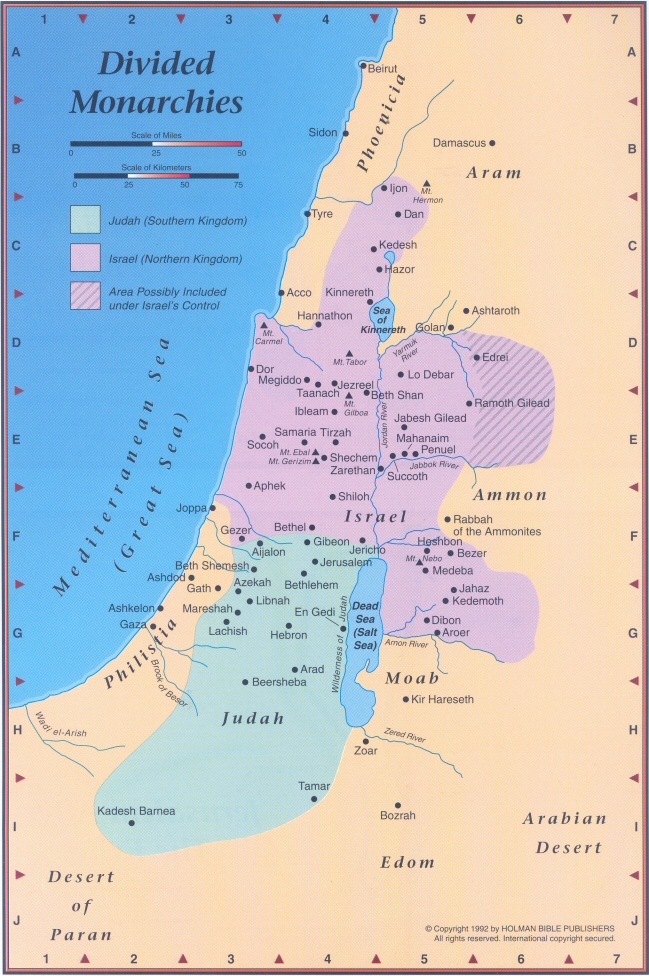
Micah and the other prophets mentioned earlier lived in a time between two of the most significant benchmark dates in Biblical history. One of them is the fall of the Northern Kingdom (Israel) in 722 B.C. at the hands of the Assyrians. Another is the fall of the Southern Kingdom (Judah) in 586 B.C. by the Babylonians – this is what began the Babylonian Exile (see the graphic showing the Divided Monarchy – click on the graphic to the right to enlarge it). So, Micah was writing to Jerusalem (in the Southern Kingdom) after the Northern Kingdom had already fallen.
As you live with and pray the Scriptures this week, ask yourself:
- What does it mean to “walk humbly with God”?
- What is mercy and how do I not only show it but love it? How have I been shown mercy?
- Justice … hmmm … how does a regular person like you and me “do justice”? Does it help to know that the root words for justice and righteousness are the same? Consider also our working definition of “righteousness” as being “all about relationship”.
- What other questions come to mind?


 Epicurious Lutheran
Leave a comment